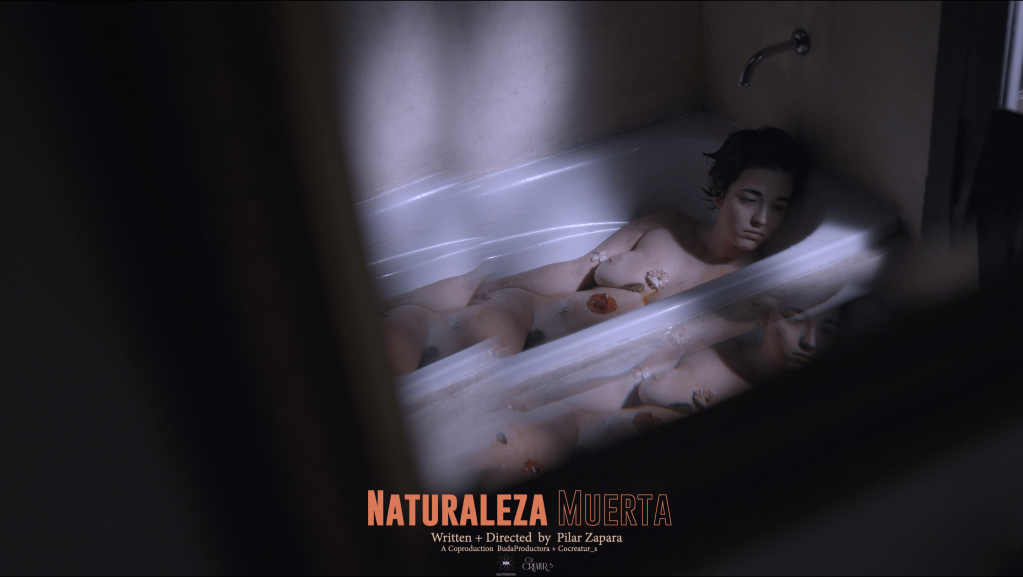
The film is currently in its festival submission phase / Actualmente en su etapa de aplicación a festivales. / Nella fase di invio ai festival.
Running Time: 11 minutes
Genre: Drama
Country: Colombia / Argentina
In the silence of a spotless tub, a woman drifts through the memory of the day she let go of motherhood.
Naturaleza Muerta explores the emotional journey of Alex, a woman living with a uterine condition who must choose between conforming to societal expectations or reclaiming her life through a vital, life-defining decision — one that challenges traditional notions of motherhood, identity, and self-worth.
Set within the private space of a bathtub and guided by flashbacks and flash-forwards, Alex recalls intimate conversations with her partner, Joaquín, and reflects on the belief systems she has inherited. As she confronts her fears, internal conflicts, and imposed expectations, the story traces her shifting emotional states—from nostalgia and doubt to clarity and acceptance.
The emotional climax unfolds as Alex imagines herself as a mother and realizes she doesn’t want to be one. Confronted with this truth and the reality of her condition, she makes a vital choice: to remove her uterus. In doing so, she not only safeguards her physical and emotional well-being but also reclaims her personal power and honors her own truth.
The film opens and closes in the symbolic space of a bathtub—which serves as a powerful metaphor for Alex’s rebirth. In the final dreamlike scene, following her radical act of self-affirmation, Alex does not wither; instead, she radiates with new light. Her transformation becomes a visual embodiment of the power of self-choice, a reconnection to creative energy, and a radical act of female autonomy—where the womb, and the place of the womb, no longer carry expectation but instead become the origin of personal rebirth.
Director’s Statement
At 43, after seven surgeries and years of illness, I had a life-saving hysterectomy. Though I never wanted to be a mother, I carried the burden in silence, pressured by medical judgment and family expectations. With the diseased organ gone, a new space opened: voice, autonomy, and expression. This film imagines a younger woman choosing wellbeing over inherited roles. Naturaleza Muerta lets silence—and disruption—speak where words fail.
It opens a conversation about the cultural stigmas around motherhood—whether by choice, circumstance, or inability—and challenges the way menopause is seen as the end of womanhood, a phase still clouded by prejudice and misunderstanding.
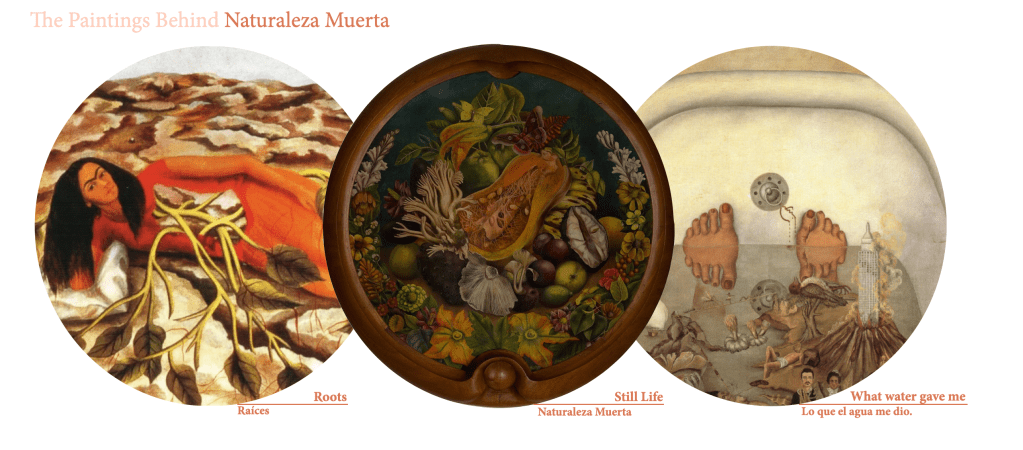
This film draws inspiration from the pictorial world of Frida Kahlo—especially works like Naturaleza Muerta, Raíces, and Lo Que El Agua Me Dio—which portray the female body as both landscape and battleground: a place of silent resistance and transformation. I wanted to bring that same visceral beauty and emotional honesty to the screen. This short film explores the complex relationship between femininity, fertility, and self-definition. Like The Lost Daughter, it addresses the unspoken emotional weight of maternal expectations and the radical, often invisible, act of choosing oneself. Through a restrained visual language and symbolic narrative, it creates a space where silence speaks loudly—where the absence of motherhood becomes fertile ground for personal rebirth.
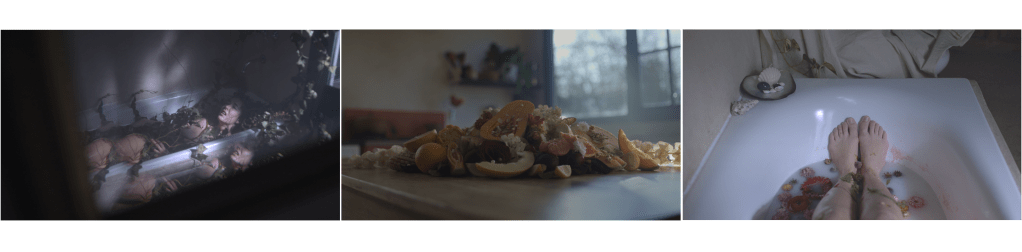
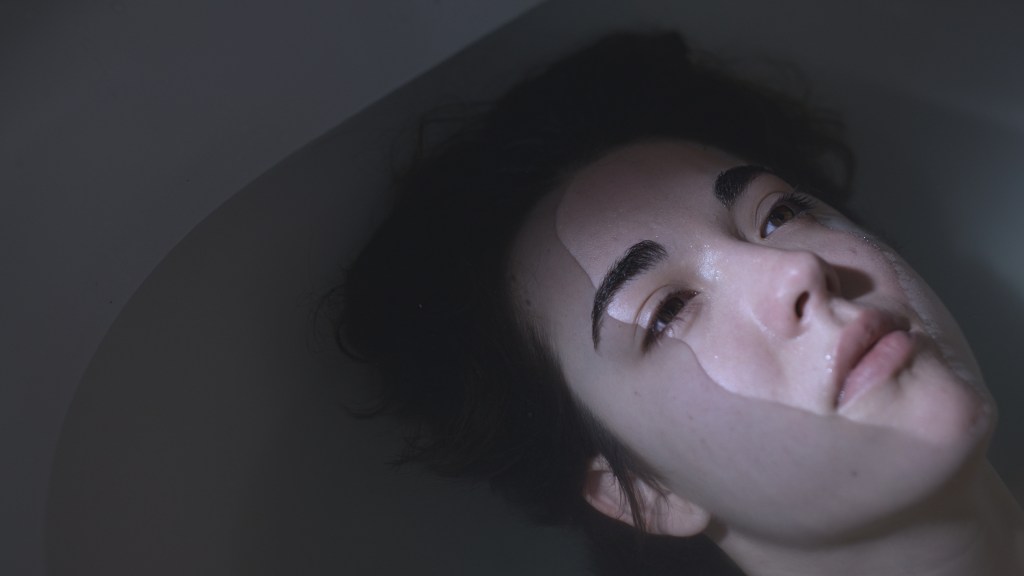
En una bañera prístina, una mujer revive la decisión vital que tomó sobre su maternidad.
Naturaleza Muerta explora el viaje emocional de Alex, una mujer que vive con una condición uterina y debe elegir entre ajustarse a las expectativas sociales o reclamar su vida a través de una decisión vital que desafía las nociones tradicionales de maternidad, identidad y autoestima.
Ambientada en una bañera y guiada por flashbacks y flash-forwards, Alex recuerda conversaciones con su pareja, Joaquín, y reflexiona sobre los sistemas de creencias que ha heredado. Mientras enfrenta sus miedos, conflictos internos y expectativas impuestas, la historia traza sus estados emocionales cambiantes, desde la nostalgia y la duda hasta la claridad y la aceptación.
El clímax emocional se desarrolla cuando Alex se imagina como madre y se da cuenta de que no desea serlo. Frente a esta verdad y a la realidad de su condición, toma una decisión vital: extirparse el útero. Al hacerlo, no solo protege su bienestar físico y emocional, sino que también recupera su poder personal y honra su propia verdad.
La película comienza y termina en el espacio simbólico de la bañera, un escenario íntimo que funciona como una poderosa metáfora del renacimiento de Alex. En la escena final, onírica, tras su acto radical de autoafirmación, Alex no se marchita; en cambio, irradia una nueva luz. Su transformación se convierte en una manifestación visual del poder de la auto-elección, una re-conexión con la energía creativa y un acto radical de autonomía femenina—donde el útero, y el lugar del útero, ya no cargan expectativas, sino que se transforman en el origen del renacimiento personal.
Declaracion de la Directora:
A los 43, después de siete cirugías, tras años de anemia severa y riesgos críticos para mi salud, me sometí a una histerectomía que me salvó la vida. Aunque nunca quise ser madre, llevé esa carga en silencio, presionada por el juicio médico y las expectativas familiares. Sin el organo enfermo, el espacio que antes estaba vinculado a la creación biológica se transformó en un espacio para otro tipo de creación: voz, autonomía y expresión artistica. Esta película imagina a una mujer más joven eligiendo el bienestar por sobre los roles heredados. Naturaleza Muerta reflexiona sobre la carga silenciosa de las expectativas maternales y el acto radical y silencioso de recuperar la voz, el amor propio y la autonomía. A través de un lenguaje simbólico y una imaginería introspectiva, quise que el silencio—y la disrupción narrativa—hablaran donde las palabras no alcanzan.
La película abre una conversación sobre los estigmas culturales en torno a la maternidad—ya sea por elección, circunstancia o imposibilidad—y desafía la idea de que la menopausia es el final de la mujer, una etapa aún rodeada de prejuicios e incomprensión.
Inspiracion
Este corto se inspira en el mundo pictórico de Frida Kahlo—especialmente en obras como Naturaleza Muerta, Raíces y Lo Que El Agua Me Dio—que representan el cuerpo femenino tanto como paisaje y campo de batalla: un lugar de resistencia silenciosa y transformación. Y explora la compleja relación entre feminidad, fertilidad y autodefinición. Al igual que The Lost Daughter, aborda el peso emocional no expresado de las expectativas maternales y el acto radical, a menudo invisible, de elegirse a una misma. A través de un lenguaje visual contenido y una narrativa simbólica, crea un espacio donde el silencio habla con fuerza—donde la ausencia de la maternidad se convierte en tierra fértil para el renacer personal.
Cast + Crew
A COPRODUCTION BUDAPRODUCTORA + COCREATUR_AS
Yoyo Sevilla · Alejandro Biondo · Mariano Lacerna · Pilar Zapata
EXECUTIVE PRODUCER Jimena Baima
FEATURING Camila Jardel · Santiago Silva
CINEMATOGRAPHER Pablo Campanario
PRODUCTION DESIGNER Julieta Noe
COSTUME DESIGNER Agustina Blanco
POSTPRODUCTION Editing Pilar Zapata
VFX Artist Mariano Lacerna
Colorist Alvaro Calero @Thriller
SOUND POST PRODUCTION Fer Giordano · Yoyo Sevilla
SOUND DESIGNER Fer Giordano
ORIGINAL MUSIC Juan Emilio Cucharelli · Yoyo Sevilla
MUSIC PRODUCER Fer Giordano
CAMERA / CINEMATOGRAPHY Camera Assistant Emiliano Berná · Focus Puller Romina Viola
Gaffer Joaquín Cirica · Electrician Julieta Brandi · Electrician Diego Moureira
PRODUCTION DESIGN TEAM
Set Dresser Emilia Ortega Grebenc
Props Milo Mayne ·
Wardrobe Assistant Julieta Bosquets · Make up and Hair Stylist Analia Martínez
ASSISTANT DIRECTOR Marina Andrade · Joaquín Moreira
PRODUCTION ASSISTANTS Diego Ruggeri· Emilio Lacerna · Luciana Biondo
SOUND Production Sound Mixer Rocio Giai Levraa · Boom Emilio Lacerna
Voices Maria Liliana Goldar · Ariana Gomez · Natalia Lucentini · Lucho Fernandez · Manuela Barral
 Pilar Zapata